Little Brook Farm Morgans: Gay Vaquero and the LBF Sport Line
Little Brook Farm has bred Morgans under the prefix LBF, for many years in the hills around Brownsville, Vermont, and since 2018 in Litchfield, Connecticut. Its aim was a versatile, correct and athletic horse of the old using type: a Morgan that could work cattle, pull a carriage and ride a dressage test, and still be a kind companion on the trail. The program is a good small example of how a sport-minded breeder combined the classic families.
Gay Vaquero, the foundation stallion
The program was built on the stallion Gay Vaquero, bred by Richard and Phyllis Nelsen of Mohican Farm. His pedigree went back many times to the famous cross of Bennington and Artemisia at the U.S. Morgan Horse Farm, and it was rich in the western blood of Richard Sellman and Roland Hill. That mix of Government and Western Working breeding is exactly what many sport breeders look for, and it showed in the horse himself.
Gay Vaquero competed in dressage, carriage driving and competitive trail, and he kept at it into his twenties. He was known for passing on a gentle, kind disposition, good bone, a long hip, a strong hind end and a handsome head and eye. Three of his daughters stayed in the program as broodmares, and they carried his qualities into the next generation.
The Vaquero daughters and the broodmare band
Two of the daughters were full sisters out of Primavera Ramona, herself bred at Mohican Farm. LBF Gay Isabella, a bay mare of 15 hands, earned an AMHA open competition medallion in dressage and worked at Third Level. LBF Gay Enchantress, a bay of 14.3 hands, earned the same dressage medallion and won awards in carriage driving. A third daughter, LBF Gay Catalina, out of the palomino mare Treasure Brightsun, won a USDF regional Training Level open championship in 2001 and went on to First Level.
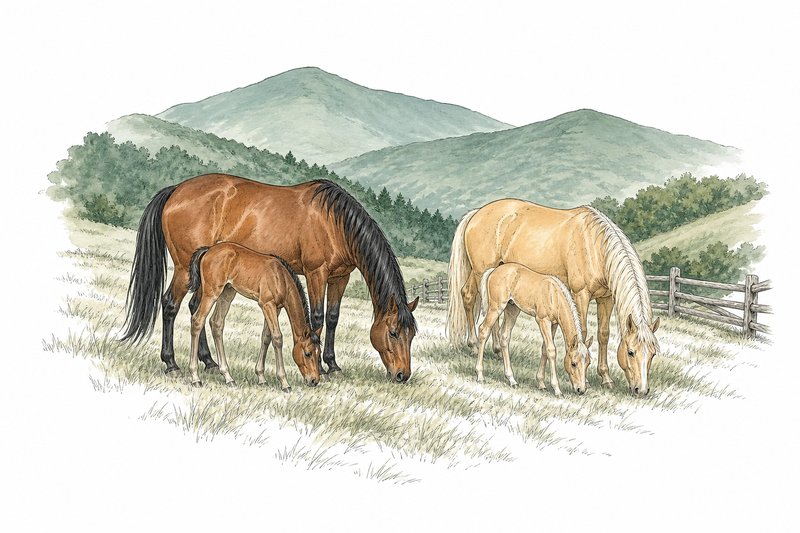
Around these mares the farm added more Western Working bloodlines, chosen for soundness and versatility, and it added color on purpose. Treasure Brightsun brought palomino, and later mares and stallions brought buckskin and smoky black into the herd. In the fall of 2018 the farm moved from Vermont to Litchfield, Connecticut, taking 24 horses with it.
LBF horses in sport
The best-known horse carrying the prefix is LBF Yukon Gold, a buckskin by Edelweiss Magic Man out of Saint Bernadette, foaled in 1997. He was worked both in harness and under saddle and, in the spring of 2003, won the Preliminary Limit division at a combined driving event at the Virginia Horse Park in Lexington. He is listed in the stallion register.
Other LBF horses went to amateur owners across New England and the Mid-Atlantic, where they were driven, ridden in dressage and shown in open and breed competitions. Two of them, LBF Carmalita and LBF Hickory Smoke, were smoky blacks by TruWest Gold Peso, a good example of how the gold lines described on the colors page can hide under a black coat.
What the LBF line shows about combining families
Little Brook is typical of many small Morgan programs of its time. It started from one proven stallion with a strong Government pedigree, kept his best daughters, and then brought in Western Working blood rather than breeding the same lines ever closer. The result was a family of moderate-sized, sound horses with good minds that did well in several disciplines at the amateur level. For anyone reading an LBF pedigree today, the bloodlines page explains where each name comes from.
It also shows the value of a clear aim. The farm did not chase the show-ring type of the moment. It bred for the jobs its horses were going to do, kept the mares that proved themselves at those jobs, and let the results decide what stayed. The daughters' medallions in dressage, the driving win of LBF Yukon Gold and the steady demand from amateur owners were the test, in the same spirit as the endurance rides and jumping trials of the old Government farm. For a small breeder with a handful of mares, that is still a sound way to build a line: one good stallion, his best daughters, and outside blood chosen for what the herd lacks rather than for fashion.
Questions and answers
What does LBF stand for in a Morgan's name?
LBF is the prefix of Little Brook Farm, a Morgan breeding program based for many years in Brownsville, Vermont, and since 2018 in Litchfield, Connecticut. Horses such as LBF Gay Isabella, LBF Gay Catalina and LBF Yukon Gold carry it.
Who was Gay Vaquero?
The foundation stallion of the Little Brook program, bred by Richard and Phyllis Nelsen of Mohican Farm. His pedigree went back many times to the Bennington and Artemisia cross and was rich in Sellman and Roland Hill blood. He competed in dressage, carriage driving and competitive trail into his twenties.
Which Morgan families are behind the LBF horses?
Mainly the Government family, through Gay Vaquero's Bennington and Artemisia lines, and the Western Working family, which the program added deliberately for soundness, versatility and color.
What did LBF Morgans compete in?
Dressage, combined driving and competitive trail, mostly with amateur owners. Recorded results include AMHA open competition medallions in dressage, a USDF regional Training Level championship and a Preliminary Limit win at a combined driving event in Virginia.