Morgan Stallion Register: Foundation and Historic Sires with Pedigrees
Every Morgan traces to one stallion, and the breed's history can be told almost entirely through the stallions that came after him. This register brings together the foundation sires of the four classic families and a set of sport-bred Morgan stallions foaled between 1985 and 2002, each with his color, height and sire and dam line.
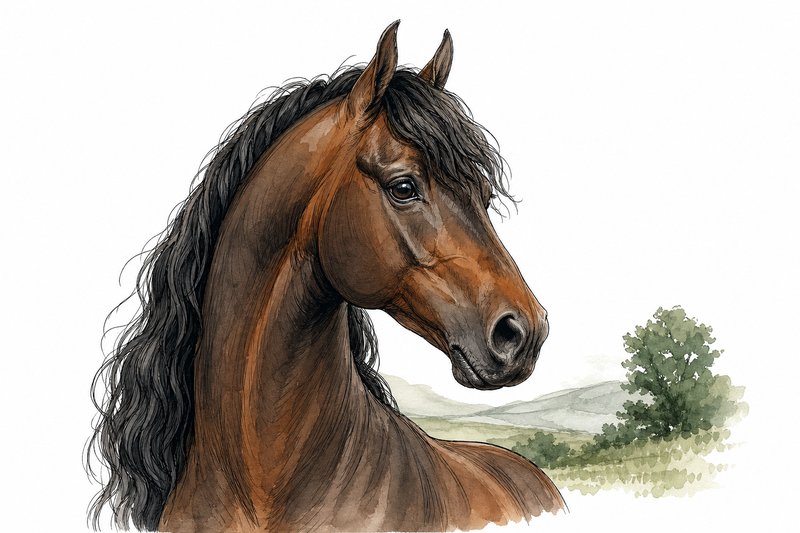
Foundation sires: where every Morgan stallion begins
The breed's founder is Figure, foaled in 1789 in West Springfield, Massachusetts, and known by his owner's name, Justin Morgan. He was small, about fourteen hands, and he made his reputation by out-pulling, out-walking and out-running larger horses. His three best-known sons, Sherman Morgan, Woodbury Morgan and Bulrush Morgan, carried his type on, and through Sherman came Black Hawk, whose line fed the Midwest horses that later went into the western ranch Morgans.
The register gives some of the old horses numbers that turn up in pedigrees to this day. Justin Morgan is number 1. Gifford Morgan 30 and his son Green Mountain Morgan 42 stand behind the Lippitt type, and the buckskin Wheeler Horse 41, a grandson of Justin Morgan, is the main source of the gold colors. A foundation Morgan horse in the stricter sense is one of these early sires, but breeders also use the phrase for the stallions who founded each of the four families in the twentieth century.
| Stallion | Foaled | Family | Sire x dam | Why it matters |
|---|---|---|---|---|
| General Gates | 1894 | Government | Denning Allen x Fanny Scott | Foundation stallion of the U.S. Morgan Horse Farm; full brother of Lord Clinton |
| Red Oak 5249 | – | Government | General Gates x Marguerite | By General Gates out of Marguerite; foundation sire for the Sellman ranch |
| Linsley 7233 | – | Government | General Gates x Sunflower Maid | By General Gates; stood for Elmer Brown in Kansas |
| Bennington 5693 | – | Government | General Gates | Senior stallion at Weybridge from 1925; sire of the Artemisia foals |
| Mansfield | – | Government | Bennington x Artemisia | Sire of Sonfield, Winchester, Monterey and Lippitt Mandate |
| Querido | – | Government | Bennington x Artemisia | Stood at Roland Hill's Horseshoe Cattle Co.; sire of Tehachapi Allen |
| Headlight Morgan | – | Western Working | Ethan Allen 2nd x Lady Stratton | Foundation stock of the Sellman ranch |
| Jubilee King | – | Brunk | Penrod x Daisette | Golden chestnut with flaxen mane and tail; known for a big, open trot |
| Flyhawk | – | Brunk | Go Hawk x Florette | Among the most influential sires of the breed; stood at the L.U. ranch |
| Senator Graham | – | Brunk | Senator Knox x Fanita | Crossed with Flyhawk lines; sire of Shine On |
| Linspar | – | Western Working | Linsley x Sparbelle | Crossed on Flyhawk daughters at the L.U. ranch |
| Stetson | – | Brunk | Flyhawk x Sentola | Sired more than 100 foals; bred by Helen Brunk Greenwalt |
| Warhawk | – | Brunk | Flyhawk x Sentola | Cow horse with great stamina; 100 foals for the Cross Ranch and later owners |
| Montcrest Sellman | – | Western Working | Joe Bailey x Kitty E. | Main sire of the Piedmont Land and Cattle Co. |
| Blackman | – | Western Working | Redman x Gojia | Influential sire in both the western and eastern U.S. |
| Delbert | – | Western Working | Revere x Alibirdi | Bred at the U.S. Range Livestock Experiment Station; 91 foals for the Jackson Ranch |
| Glider | – | Brunk | Jubilee King x Gizea | Chestnut with flaxen mane; crossed on Imperial daughters at the Cross Ranch |
The foundation table is short on purpose. It lists only stallions whose pedigrees and roles are recorded in the families' own histories, and it leaves a cell blank where the records used do not give the value. The bloodlines page tells each family's story in full and has a pedigree chart of the Government line from General Gates to his grandsons.
The historic Government stallions
General Gates, foaled in 1894, was the first senior stallion at the U.S. Morgan Horse Farm and held the post until 1920. The farm wanted more size without losing type, and he gave it three sons that shaped the breed. Red Oak and Linsley went west and became important in ranch pedigrees; Bennington stayed at Weybridge and became senior stallion in 1925.
Bennington's cross with the chestnut mare Artemisia is the most famous single cross in Morgan breeding. It gave Mansfield, Canfield, Ulysses and Querido. Mansfield sired Sonfield and Winchester for the farm and Monterey, who became the foundation sire for E.W. Roberts in California. Querido went to Roland Hill's Horseshoe Cattle Co. and sired Tehachapi Allen. A Morgan stallion carrying two or three of these names close up in his pedigree is almost always a Government-type horse: taller than the old Vermont Morgans, with a longer neck and plenty of movement.
Brunk and western sires
The Brunk stallions brought action and elegance. Jubilee King, a big golden chestnut by Penrod out of Daisette, passed on his style, high tail carriage and big trot for many generations. Flyhawk, by Go Hawk out of Florette, is counted among the greatest Morgan sires of any line, known for his ground-covering trot, dense bone and toughness. At the L.U. Sheep and Cattle Co. in Wyoming, Flyhawk was crossed with Jubilee King and Lambert mares and with daughters of Linspar, and his sons Stetson and Warhawk, both out of Sentola, carried the line on.
The western ranch sires were chosen for work. Headlight Morgan, by Ethan Allen 2nd out of Lady Stratton, was foundation stock for Richard Sellman's Mountain Vale Ranch. Montcrest Sellman was the main sire for William Randolph Hearst's Piedmont Land and Cattle Co. Blackman, by Redman out of Gojia, stood for E.W. Roberts and was influential in both the West and the East. Delbert, bred at the U.S. Range Livestock Experiment Station in Montana, sired 91 foals for the Jackson Ranch. These horses were tested on cattle and on long days in rough country, which is why their descendants still show up in endurance and trail pedigrees.
It is worth noticing how often the same horses crossed between families. Red Oak and Linsley were Government-bred and became western foundation sires. Flyhawk was Brunk-bred and stood at stud on a Wyoming sheep and cattle ranch. Mansfield sired a Lippitt horse. The four families are useful labels, but the stallions themselves moved between them freely, and a modern pedigree usually shows all of it within five or six generations. Tracing those crossings is half the pleasure of reading an old Morgan pedigree.
Sport-bred Morgan stallions and their pedigree lines
The second table lists Morgan stallions bred and campaigned with sport in mind, foaled between 1985 and 2002. Their records are mostly in dressage, combined driving, sport horse in-hand classes and ranch work. Each row gives the pedigree as sire and dam, so the families behind each horse can be followed back. Where a year or a height is not reliably recorded, the cell is left empty rather than guessed.
| Stallion | Foaled | Color | Height | Sire x dam | Record |
|---|---|---|---|---|---|
| Adiel's Casino Gold | – | Palomino | 15 hh | Sweet's Dexter x Eden Rose | – |
| Blythewood Vermont Legend | – | Chestnut | 14.2 hh | Shane Ashmore x Dunham Lucky Legend | In-hand and pleasure driving champion as a two-year-old, then combined driving |
| Caduceus Denver | – | Black | 16 hh | Wyoming Flyhawk x Topside Sable | – |
| Caduceus Pericles | 1995 | Black | 15.2 hh | Wyoming Flyhawk x Caduceus Allegra | Dam by Shine On |
| Caduceus Quasar | – | Golden palomino | 15 hh | Casual Sir Jackson x Coal Creek Honey Spice | Placed high in a sport horse suitability class as a yearling |
| Chief of State | – | Chestnut | 15 hh | The Statesman x Fleur-De-Lis | 1990 national combined driving pair champion; also won over fences |
| Coal Creek Fly Hawk | – | Black | 15.2 hh | Wyoming Flyhawk x Red Kay K | Placed at Training and First Level dressage; pleasure driving champion |
| Desiderata Desert Storm | – | Bay | 15.1 hh | Desiderata Sparfield x Just A Nod Michelle | From a line noted for western performance |
| GKB Coal Magic | 2002 | Black | 15.2 hh | Ragtime Voodoo Magic x Metis Koffee | Training Level reserve champion at his second show |
| Hassayampa Trial By Fire | – | Bay | 15.2 hh | Ragtime Rimfire x Hassayampa | Schooled First Level dressage and jumping 3 ft 3 in |
| Homeward Mozart | – | Black | 16 hh | B-L Independence x Yellow Iris Inger | High-score championships at Training and First Level |
| Iron Forge Starman | 1989 | Bay | 15.2 hh | Iron Forge Be Blue x Cambridge Suzy QT | 1998 USDF All-Breeds first place at First Level |
| Laughters Uncle Sam | – | Liver chestnut | 15 hh | The Statesman x Statesmans Magic | Trained for combined driving and ridden dressage |
| LBF Yukon Gold | 1997 | Buckskin | 15 hh | Edelweiss Magic Man x Saint Bernadette | Worked in harness and under saddle |
| Lyonhil Quasar | – | Brown | 15.1 hh | Lyonhil Quintessence x Briarwood Audrey Ash | Sire of the Raynyday brothers |
| Montezsierradon | – | Black | – | Roland G Hill x Dusky Vermont | Working cattle horse and endurance mount |
| Mythic Aladdin | – | Black chestnut | – | Broadway Charlie x Casland Julie | Undefeated in conformation classes as a two-year-old |
| Mythic Hyperion | 2000 | Mahogany bay | 15.3 hh | Mythic Aladdin x L S Elizabrass | Reserve champion in sport horse suitability |
| NeverLand Captain Hook | – | Bay | 15 hh | Patchett Hill x Coal Creek Honeybarb | – |
| Oak Knoll Major | – | Dark brown | 15.1 hh | Ransomvale Gabriel x Cavamy Select Lad | Top ten in four classes at the 1994 Grand National |
| Olympus Way To Go | 1985 | Dark bay | 14.3 hh | Breezeway x Daisy Ash | Won an in-hand stallion qualifier at 21 |
| Ragtime Chinga King | – | Black | 14.2 hh | H-Saracen x Ragtime Belle Starr | – |
| Raynyday Grand Finale | – | Bay | 16 hh | Lyonhil Quasar x Shadygrove Serenade | Full brother to Raynyday Squire Jack |
| Raynyday Squire Jack | – | Brown | 15.3 hh | Lyonhil Quasar x Shadygrove Serenade | Full brother to Raynyday Grand Finale |
| Slate Run RK Ladd | – | Palomino | 14.3 hh | Shatona Karzan x Ashabella | Working cow horse for most of his life |
| Statesmans Masterpiece | – | Liver chestnut | 14.3 hh | The Statesman x Rockbottom Lady | Qualified for the 1996 USDF regional championship at Training Level |
| Statesmans Silhouette | – | Dark bay | 15.1 hh | Chief of State x Meadowrock Melanie | 1995 USDF All-Breeds reserve champion, Training Level |
| Statesmans Sky Hawk | 2001 | Buckskin | 15.2 hh | Chief of State x Coal Creek Spicy Glow | Training Level dressage and carriage work |
| Triple S Majestic Wind | 2002 | Palomino | 15.2 hh | Triple S Red Wind x Triple S Meadowlark | – |
| Triple S Wings of Wind | – | Chestnut | 15.2 hh | Triple S Red Wind x Primavera Ramona | Worked as a ranch horse |
| TruWest Sa'Dan Deville | – | Golden palomino | 15.2 hh | H-Saracen x Agie Beaver CY | Trained for western performance |
| Turfwood Royal Flush | – | Chestnut, silver mane | – | Clement x Tarranne De Boyd | – |
| Whippoorwill Aristocrat | 1998 | Black | 15.2 hh | Whippoorwill Skylark x Whippoorwill Corona | Shown at USDF-recognized open dressage shows |
| Wintergreen Don Diego | 2000 | Liver chestnut | 15 hh | HVK Santana x Ladonna | 2004 champion Morgan sport horse stallion |
| Wintergreen Shaman | 1999 | Flaxen chestnut | 15 hh | HVK Santana x Wintergreen Token | 2002 champion junior trail horse |
A few patterns stand out. Several of these Morgan stallions are sons of the same sires: Wyoming Flyhawk appears three times, The Statesman three times, and Chief of State twice, so the Statesman line appears in two generations of the table. The Chief of State family is the clearest example of a line bred for sport, with a national combined driving championship in harness and dressage results for his sons. The Lyonhil Quasar sons are full brothers from one dam. On the western side, the Triple S and TruWest horses and the working cow horses Slate Run RK Ladd and Montezsierradon keep the ranch tradition going.
Color is scattered through the list as it is through the breed. Most of the stallions are bay, black or chestnut, and the buckskins and palominos, such as LBF Yukon Gold, Statesmans Sky Hawk and Adiel's Casino Gold, carry the cream gene that came down through the old gold lines. The colors page explains how that works.
What the register says about the modern Morgan stallion
Read as a group, the 35 sport-bred stallions give a fair picture of what breeders kept entire when they bred for sport. Of the 32 with a recorded height, the smallest stands 14.2 hands and the tallest 16, and 22 of them fall between 15 and 15.2. The middle of the list is 15.1. That sits toward the top of the breed's usual range, which is what you would expect from breeders who wanted a horse that could hold its own at open shows, but none of them is a big horse by warmblood standards.
The disciplines in the records tell a similar story. Dressage is the most common: Iron Forge Starman, Statesmans Silhouette, Statesmans Masterpiece, Homeward Mozart, Coal Creek Fly Hawk, GKB Coal Magic and Whippoorwill Aristocrat all have results at Training or First Level, several of them at USDF-recognized open shows. Driving comes next, led by Chief of State's national pair championship and by Blythewood Vermont Legend, Laughters Uncle Sam and LBF Yukon Gold. A third group worked for a living, as ranch and cow horses: Slate Run RK Ladd, Montezsierradon and Triple S Wings of Wind.
Very few of these horses did only one thing. Chief of State won in harness and over fences; Coal Creek Fly Hawk won dressage placings and pleasure driving championships; Montezsierradon worked cattle and was ridden in endurance. That versatility is the Morgan stallion's strongest argument for a sport breeder, and it is also why a pedigree full of single-purpose show horses should make you look twice.
The register also shows how long a good stallion stays useful. Olympus Way To Go, foaled in 1985, won an in-hand stallion qualifier in 2006, at the age of 21, against younger horses. Longevity is part of what the old Government and ranch breeders selected for, and it still shows in their descendants.
How to judge a Morgan stallion's pedigree for sport
For a sport breeder, a Morgan stallion's pedigree is where you start, not where you finish. Look for competition records in the discipline you breed for: dressage scores at Training and First Level, results in combined driving, completed endurance rides or a record as a ranch horse. Then look at the foals. A stallion whose sons and daughters do the same jobs is worth more than one with a brilliant show record and no proven offspring.
The pedigree tells you what to expect from the cross. A stallion strong in Government and Brunk lines will usually add size, reach and action. A stallion with mostly Western Working or Lippitt blood will usually add toughness, hard feet and a quiet mind, but less height. Put a mare with one kind of strength to a stallion with the other, and a sport breeder has room to work with.
Temperament is the part of a stallion that papers cannot show. Morgan stallions have a reputation for being manageable and sensible; Chief of State, for example, won championships over fences with junior riders. Whenever you can, see the stallion handled, ridden and, if possible, driven. How he behaves in a strange place with mares nearby tells you more than any list of wins.
Finally, compare what you see with the historic names. A modern stallion that moves like a Flyhawk or has the neck of a Mansfield is carrying something real from the foundation Morgan horse lines; one that looks nothing like them may have more outside blood than his papers suggest at first glance. The Little Brook Farm profile gives one Vermont breeder's example of mixing the lines.
Questions and answers
Which Morgan stallion founded the breed?
Figure, foaled in 1789 and later called Justin Morgan after his owner. He is number 1 in the American Morgan Horse Register, and every registered Morgan traces back to him.
Who are the most influential Morgan stallions in sport pedigrees?
From the Government farm, General Gates, Bennington and his sons Mansfield and Querido. From the Brunk family, Jubilee King and Flyhawk. In the western lines, Headlight Morgan, Linsley and Linspar. Most sport-bred Morgans carry several of them.
What height is a typical Morgan stallion?
The sport-bred stallions in this register stand between 14.2 and 16 hands, with most at 15 to 15.2. That matches the breed as a whole, which mostly falls between 14.1 and 15.2 hands.
What should a breeder look for in a Morgan stallion for sport?
Proven movement and temperament first, then a pedigree that shows where they came from. A stallion with competition results at Training or First Level dressage, in combined driving or on the trail, and with offspring that do the same, tells you more than show-ring type alone.