Morgan Cross Horse Guide: Friesian, Quarter Horse, Percheron, Arabian
Crossing a Morgan with another breed is almost as old as the breed. Morgan blood went into the Standardbred, the American Saddlebred and the Tennessee Walking Horse long before anyone talked about sport horse crosses. Today a Morgan cross horse is usually bred for one reason: to add size, scope or a particular talent to the Morgan's soundness and good sense, or the other way round.
Why breed a Morgan cross horse
A purebred Morgan is hard to improve for what it was bred to do. It is sound, economical, willing and athletic in a compact frame. The reasons to cross are specific. A rider who is tall, or who wants to compete where big horses are the norm, may want more height. An eventer may want a longer gallop. A driver may want more weight and presence in front of a carriage. A breeder of another breed may want to add the Morgan's temperament, feet and stamina to their own horses.
What a cross cannot do is guarantee which parent a foal will take after. First-generation crosses vary a great deal, even among full siblings from the same pair, so a good breeder chooses parents that are each strong in the traits they want and plans for either outcome. It also helps to know which Morgan family the Morgan parent comes from. A Government or Brunk Morgan brings more size and action to a cross, a Lippitt or Western Working Morgan brings more toughness and a quieter mind; the bloodlines page explains the difference.
One more practical point before choosing a Morgan cross horse: registration. The American Morgan Horse Association registers only purebred Morgans, so a cross will need a different registry or none at all. For a riding horse that may not matter. For a breeding program, or for resale, it does.
Morgan blood in other breeds
The Morgan was crossing into other breeds long before anyone planned a sport horse cross. In the nineteenth century Morgan trotters raced on country roads and early tracks against the horses that became the Standardbred, and Morgan mares and stallions went into the harness and saddle horses of Kentucky and Tennessee. Morgan blood is part of the background of the Standardbred, the American Saddlebred and the Tennessee Walking Horse, which is why horsemen in those breeds sometimes recognize a Morgan outline in their own horses.
The traffic went both ways. The old Midwest Morgans that fed the western ranch lines carried some Thoroughbred blood through Diomed, Messenger and Eclipse, and the Lippitt breeders were valued precisely because they kept outside blood to a minimum. Knowing that history helps when you read a cross's pedigree: a Morgan parent with a lot of outside blood a few generations back will not bring the same consistency to a cross as a high-percentage Morgan will.
The Morgan Friesian cross
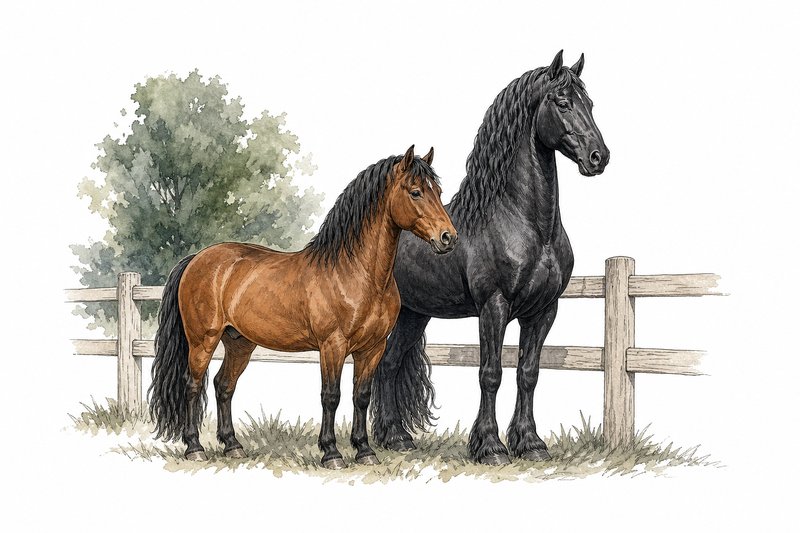
The Morgan Friesian cross has become one of the most popular Morgan crosses for dressage and driving. The Friesian brings size, heavier bone, a long flowing mane and a lofty trot that draws attention in harness. The Morgan brings a shorter back, harder feet, more stamina and usually a quicker, lighter way of going. The foals often land in the middle, around 15 to 16 hands, with a strong neck and a lot of presence.
For a dressage rider, the attraction is a horse with a big trot and an uphill build that is still easy to keep. For a driver, a Morgan Friesian cross combines the Friesian's look in front of a carriage with the Morgan's endurance on a long marathon course. Watch the canter and the walk when choosing one. The Friesian side can bring a canter that is harder to collect and a walk that lacks reach, and those are the gaits where the Morgan parent helps most.
Several registries for Friesian sport crosses accept horses with a Morgan parent, usually after an inspection. Requirements differ, so check them before breeding if papers matter to you.
The Morgan Quarter Horse cross
The Morgan Quarter Horse cross is a natural fit for ranch and trail work, and it echoes the Western Working Morgans that were bred for cattle country from the 1880s onward. The Quarter Horse adds speed over short distances, a lower, flatter way of going and a strong instinct for cattle. The Morgan adds a longer-lasting trot, stamina for long days and very good feet.
A Morgan quarter horse cross is often a very sensible, easy horse, which makes it a popular family and trail mount. In the arena it can do well in western disciplines such as ranch riding, reining and working cow classes. The two breeds share a reputation for calm temperaments, so the cross rarely brings surprises there. Neither the AMHA nor the American Quarter Horse Association registers the cross as purebred, and most such horses are ridden unregistered or through a general part-bred registry.
Size is usually modest. The Quarter Horse mostly stands between 14.3 and 16 hands and the Morgan between 14.1 and 15.2, so the cross rarely adds much height, and a rider who needs a bigger horse should look at the Thoroughbred, warmblood or draft crosses instead. What it adds is a different balance of gaits: more jog and lope from one side, more trot and walk from the other, which suits trail riders who spend long days at the slower paces.
Percheron and other draft crosses
A Morgan crossed with a Percheron or another draft breed is usually bred for driving, trail riding or as a larger riding horse for heavier riders. The Percheron brings size, bone and a calm, steady nature; the Morgan brings more energy, a quicker step and more stamina than a pure draft horse. The result is often a horse of 15.2 to 16.2 hands with a solid build and a willing attitude.
These crosses suit combined driving at the lower levels, pleasure driving and farm work, and they make good trail horses for riders who want something quiet and substantial. They are less suited to fast work, and a heavy draft cross can be slow to mature. Of the draft breeds, the Percheron is the most common partner for a Morgan in North America, but Clydesdale, Belgian and Shire crosses are also bred.
The Morgan Arabian cross: the Morab
The Morgan Arabian cross has the longest organized history of any Morgan cross and has its own name, Morab, and its own registries. The Arabian adds refinement, a lighter frame and outstanding endurance; the Morgan adds bone, strength and a more substantial build. Morabs are often very hardy, with good feet and a tough constitution.
That combination makes the Morab a natural choice for endurance and competitive trail riding, where both parent breeds already do well. A Morgan Arabian cross can also be a good all-round riding horse, lighter and quicker than a Morgan, more solid than many Arabians. The registries for Morabs recognize horses bred from Morgan and Arabian parents and, in some cases, horses bred Morab to Morab over several generations.
Choosing the Morgan parent for a cross
Most crosses are planned around the other breed, and the Morgan parent is treated as the fixed part. It should not be. The traits a Morgan passes on most reliably are temperament, feet, bone and stamina, and those are the ones to look for in the Morgan parent. A calm horse with hard feet and a good walk is worth more to a cross than a flashy show Morgan with a short stride.
Match the Morgan to what the other parent lacks. A Friesian or a draft horse usually needs more energy and a quicker hind leg, so a sport-bred Morgan with a forward trot suits them. An Arabian needs more bone and substance, so a solid, old-type Morgan often makes the better Morab. A Thoroughbred brings the gallop but can bring a hot temperament, and a very quiet Morgan balances it. For the Morgan Quarter Horse cross, pick a Morgan with a long, free walk and a good trot, since the Quarter Horse side will not add much at those gaits.
Registration papers help here too. A Morgan with a clear family behind it, Government, Brunk, Lippitt or Western Working, makes the cross easier to predict, and its pedigree can be read against the bloodlines to see which traits are likely to come through.
Thoroughbred and warmblood crosses for sport
For eventing and jumping, the most common cross is with the Thoroughbred. It adds length of stride, gallop and scope over fences, while the Morgan adds a sensible mind, sound feet and a more economical build. The Morgan and Thoroughbred cross is often the answer for an eventer who loves the Morgan temperament but wants to go beyond the lower levels.
Warmblood crosses are less common but are bred for dressage, where they can add size and extended gaits. Some warmblood and sport horse registries will inspect and accept part-Morgan horses. As with every cross, the Morgan parent's family matters: a sport-bred Government or Brunk Morgan brings more movement to the cross than a small, old-type horse. The stallion register lists sport-bred Morgan stallions with their pedigrees, and the Morgan sport horse overview covers what the breed brings to each discipline on its own.
A Morgan cross horse is at its best when the cross was planned for a job. Decide what the horse should do, pick the parents for it, and the Morgan side will usually repay you in soundness and good sense long after the competition years.
Questions and answers
Can a Morgan cross horse be registered?
Not with the American Morgan Horse Association, which registers only purebred Morgans. Several crosses have registries of their own, most notably the Morab for Morgan and Arabian crosses, and some sport horse and part-bred registries accept Morgan crosses based on inspection.
What is a Morgan Friesian cross used for?
Mostly dressage and driving. The cross usually has more size and a heavier build than a Morgan, with the Friesian's presence in harness and the Morgan's stamina, soundness and quick mind.
What is a Morab?
A Morab is a Morgan and Arabian cross, and it is the Morgan cross with the longest organized history. Morabs are typically refined, hardy and good at endurance and trail riding.
Is a Morgan Quarter Horse cross good for ranch work?
It can be very good. The Quarter Horse adds speed over short distances and cow sense, and the Morgan adds stamina, a strong trot and hard feet. Many such crosses work as ranch and trail horses.
Which Morgan cross is best for eventing?
A Morgan and Thoroughbred cross is the usual choice when a rider wants more gallop and scope than a purebred Morgan offers, while keeping the Morgan's sense and soundness.